The Gap
Part of the answer is that the two sides are optimizing for different things. Leaders tend to look at AI and see automation — efficiency, speed, cost. Employees look at the same tools and ask a different question: will this make my work easier and more worth doing, or will it make me disposable? Both are legitimate views of what AI is for. The trouble is that most companies never put them in the same room, so leadership hears what the dashboards say, the dashboards say what people report, and people report what is safe to report. The real resistance stays underground, the tools stay “adopted,” and the work stays exactly the same.
The strongest value is not in either camp. It sits at the intersection — where efficiency and better work turn out to be the same project — and finding it requires a conversation most organizations do not know how to have. That is a method rather than a tool, and it is the method I bring.
The Method
Twelve years ago, I ran kaizen events across a 1,000-branch network, armed with post-it notes and stopwatches. Years later, I came back to the same branches — first with statistical models and redesigned workflows, and in later years with machine learning and AI. The tools changed beyond recognition, but the lesson did not: improvement sticks when the people who do the work help shape it, and dies when it is deployed at them. The GAIN loop is that discipline — continuous improvement, rebuilt for the AI age. And if anything, the faster the tools change, the more the discipline matters: it is a loop because you never deploy AI once.
The entry point is the GAIN Audit: two weeks inside your operation, ending in a leadership debrief that tells you where adoption is actually stuck, what your people won’t tell you, and which of their own ideas are worth backing first. You will know exactly what to do next — whether or not you do it with me.
Why Me
For seven years I was the executive these dashboards were shown to. Between 2019 and 2026 I led digital transformation across United Rentals’ network of more than 1,500 locations, and the adoption numbers that reached me stayed green long after they had stopped being true. I know what they hide, because mine hid it too. That is why the GAIN Audit checks the reported number against what the frontline actually does.
I had seen the same network from the other end first. In 2014 I ran branch-level kaizen events across United Rentals as a consultant, and I came back five years later as an executive — beginning with statistical models and redesigned workflows, and building up to machine learning tools in every branch and the piloting of voice AI for field sales, cutting critical cycle times by 20% along the way and running more than seventy sessions in the field with the teams who had to live with what we built. I went in with post-its the first time and with models the second, and the hard part was the same both times. It was never the technology.
Before that, I spent nine years at Booz & Company leading strategy and transformation work across five continents, and earned my MBA at Columbia. Today I also serve as Associate Partner at Eendigo, working with private-equity-backed companies on commercial excellence, and I write essays on AI and trust — because I have come to believe that the systems people actually adopt are the ones they can question, trace, and shape. I run my own method by those same rules.
Selected engagements
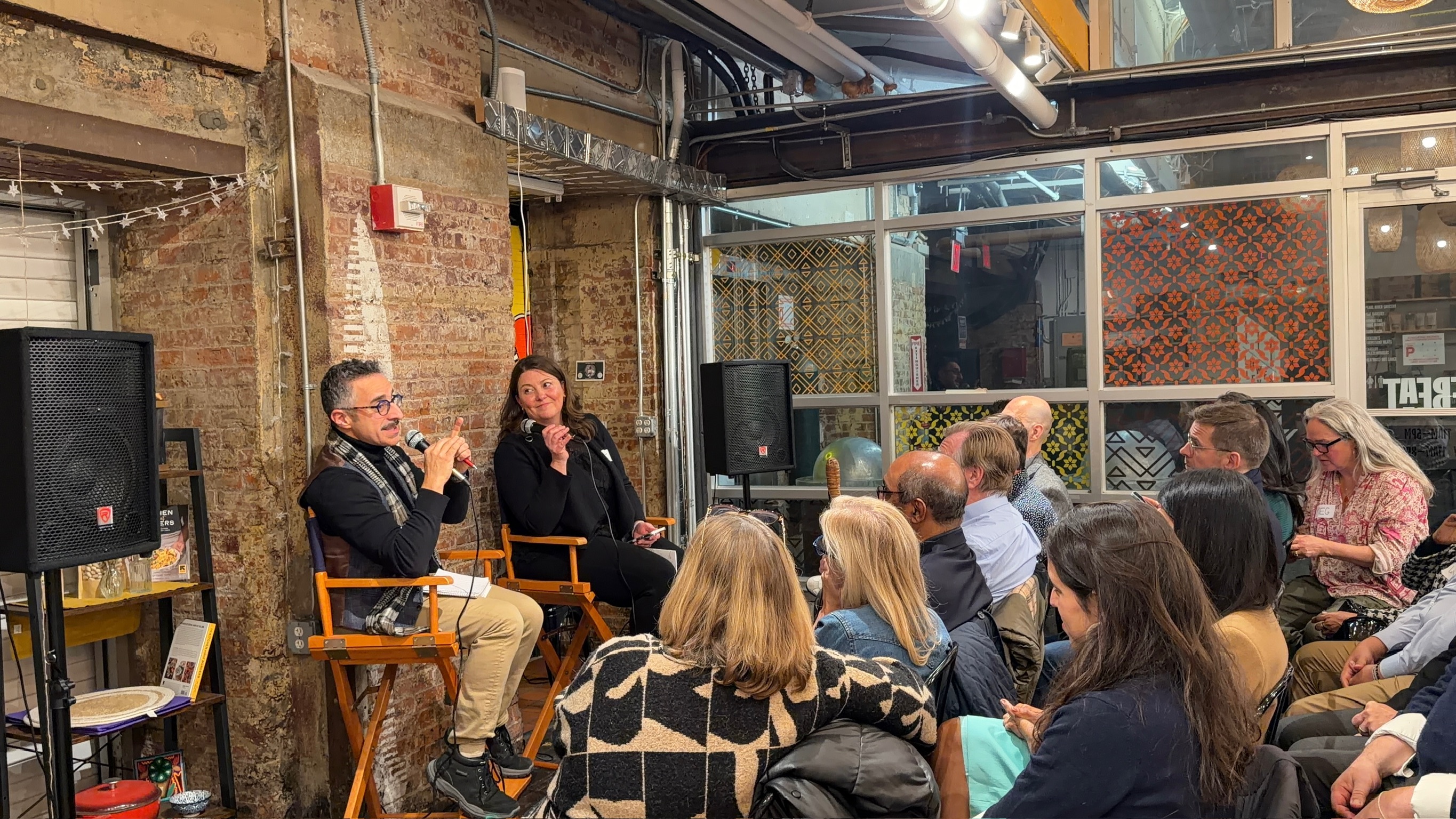
Moderating an AI ethics discussion — Conscious Capitalism, New York Chapter
The Network
Thinking & Writing
Long-form essays at the intersection of science, philosophy, and literature — subscribe on Substack